The sakura field guide
Types of Blossoms
A beginner’s guide to cherry blossoms: what they are, why they matter, and the remarkable wild trees behind Japan’s spring spectacle.
What exactly is a cherry blossom?
Sakura is the Japanese word for flowering cherry trees and their blossoms. They belong to the rose family, Rosaceae. Botanists may place true cherries in Cerasus or within the larger genus Prunus, alongside relatives such as plums and peaches.
Most wild flowering cherries have five petals, but cultivated varieties may have many more. Blossoms can be white, pale pink, deep pink or, in some cultivars, yellowish or greenish. Trees are deciduous: they lose their leaves in winter, flower in spring and then develop their leafy summer canopy.
Flowering cherries are not the same as the sweet cherry varieties grown for supermarket fruit. Some ornamental trees produce small fruit that wildlife eat, but the fruit is not automatically suitable for people. Cherry stones and other plant parts can contain cyanogenic compounds: do not chew pits or treat an unknown tree as food.
A short history of sakura & hanami
Flower viewing has deep roots in Japan. Plum blossoms were prominent in early court culture; by the Heian period (794–1185), cherry blossoms had become a major subject of poetry and aristocratic spring gatherings. Sakura also had seasonal significance in rural life, linking flowering landscapes with the farming year.
During the Edo period (1603–1868), planting in public places helped spread hanami beyond court and warrior elites. Mountain cherry and Edohigan were admired long before Somei-yoshino, a cultivated cherry developed in the late Edo period, became a familiar park and riverside tree.
The brief bloom is often associated with mono no aware: an awareness of beauty and impermanence. Sakura imagery appears in art, literature and modern celebrations of new beginnings, but it has also been used in wartime nationalist symbolism. Its meaning is richer than a single romantic idea. Today, hanami can simply mean taking a walk, sharing a picnic or enjoying illuminated blossoms after dark.
Wild species, hybrids & garden varieties
A species is a botanical grouping found in nature. A cultivar is a selected garden form, often maintained by grafting to preserve its characteristics. A hybrid has ancestry from more than one species. These categories explain why there are ten wild species in this guide but hundreds of named garden cherries.
Somei-yoshino is a cultivated hybrid associated with Oshima-zakura and Edohigan ancestry, not an eleventh wild species. Kawazu-zakura is an early-flowering hybrid cultivar associated with Taiwan cherry (Kanhi-zakura) and Oshima-zakura ancestry. Kanzan, also called Sekiyama, is a well-known double-flowered cultivar.
Yaezakura means double-flowered cherry, not one species. Shidarezakura means weeping cherry, not one species either. Taiwan cherry, Cerasus campanulata, is especially important to Okinawa’s winter blossom season and is native to parts of East Asia; its status and inclusion in Japanese native-species lists differ by source. It is not included in the ten-species framework used here.
Cherries are native to more than Japan: wild species occur across temperate parts of Asia, Europe and North America. East Asia is particularly diverse. A tree photographed in a botanical garden overseas can still represent a species native to Japan.
Japan’s 10 native wild cherry species
This guide follows the Forestry and Forest Products Research Institute’s ten-species treatment of Japanese flowering cherries, including Kumano-zakura, described in 2018. Older references list nine; broader classifications may count differently. “Native to Japan” does not mean found only in Japan. Scientific names also vary between Cerasus and Prunus. Photographs show the named species (including cultivated specimens), not necessarily trees in their native range. Bloom windows are approximate, not a forecast.
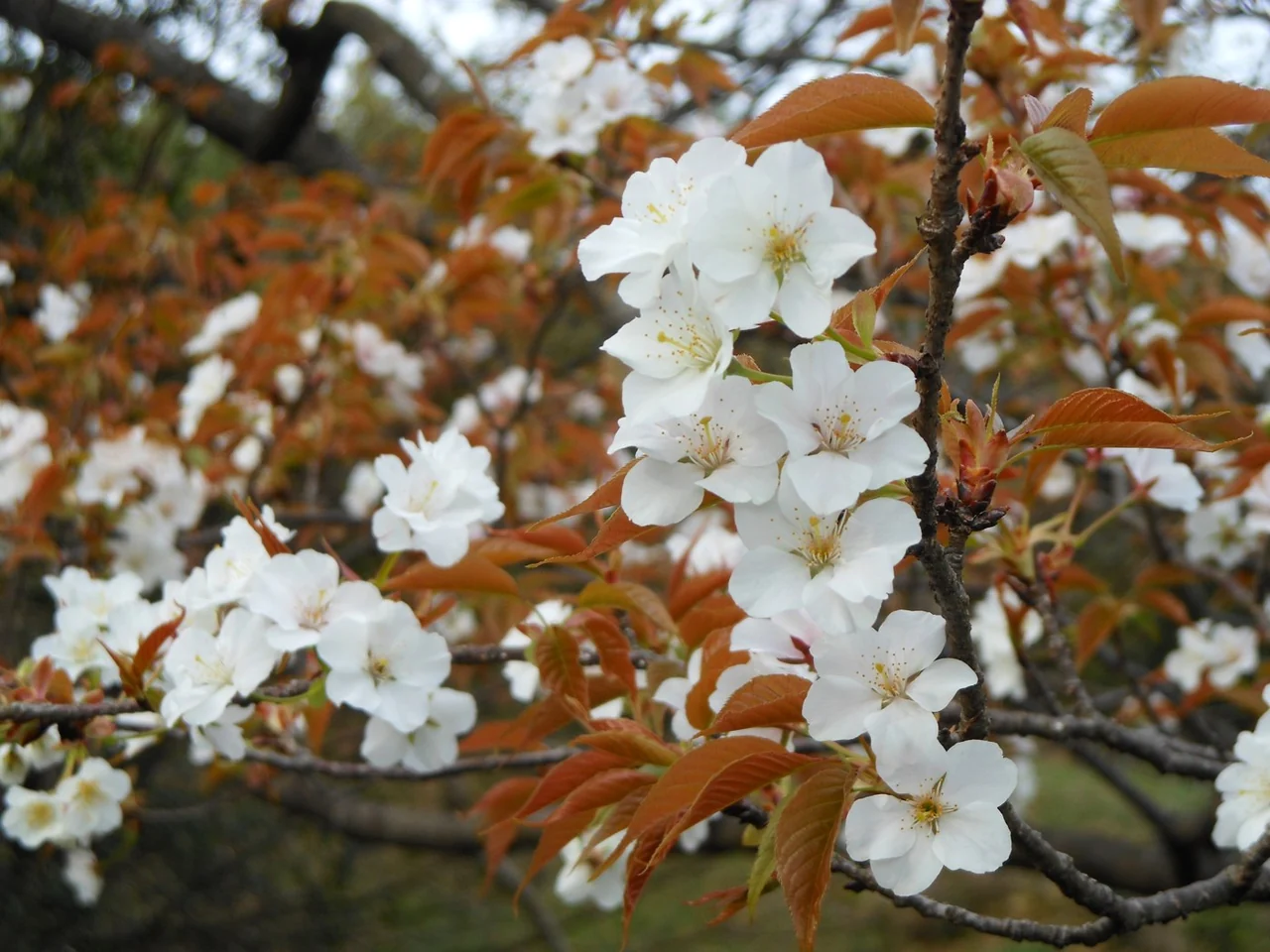
Photo: Pekachu · CC BY-SA 4.0Resized for display; image license retained. 01
Yama-zakura · Mountain cherry
Cerasus jamasakura
White to pale-pink, five-petalled flowers open alongside copper-red young leaves. A classic cherry of Japanese poetry and the mountains of Yoshino; wild trees vary naturally rather than flowering in perfect unison.
- Native range
- Central and southern Honshu, Shikoku and Kyushu.
- Typical flowering
- Typically March–April; later at elevation.
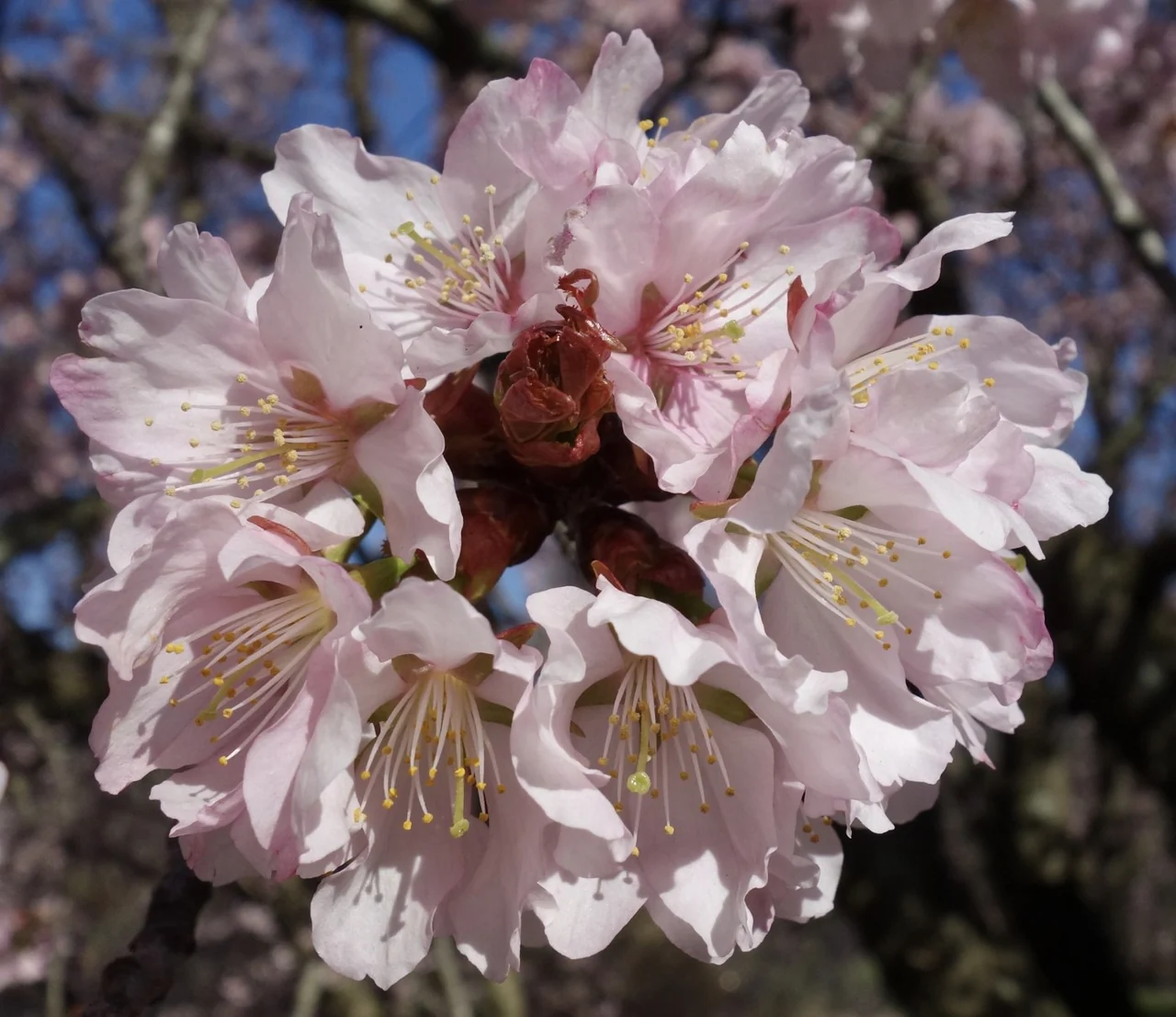
Photo: William (Ned) Friedman · CC BY-SA 4.0Resized for display; image license retained. 02
O-yama-zakura · Sargent’s cherry
Cerasus sargentii
Larger, noticeably pink flowers and reddish young leaves distinguish this cold-adapted mountain cherry. Also called Ezo-yama-zakura or Beni-yama-zakura. The photograph shows a cultivated specimen at Harvard’s Arnold Arboretum, not its native habitat.
- Native range
- Hokkaido and northern/central Honshu; also the Russian Far East and Korean Peninsula.
- Typical flowering
- Typically April–May, depending on latitude.
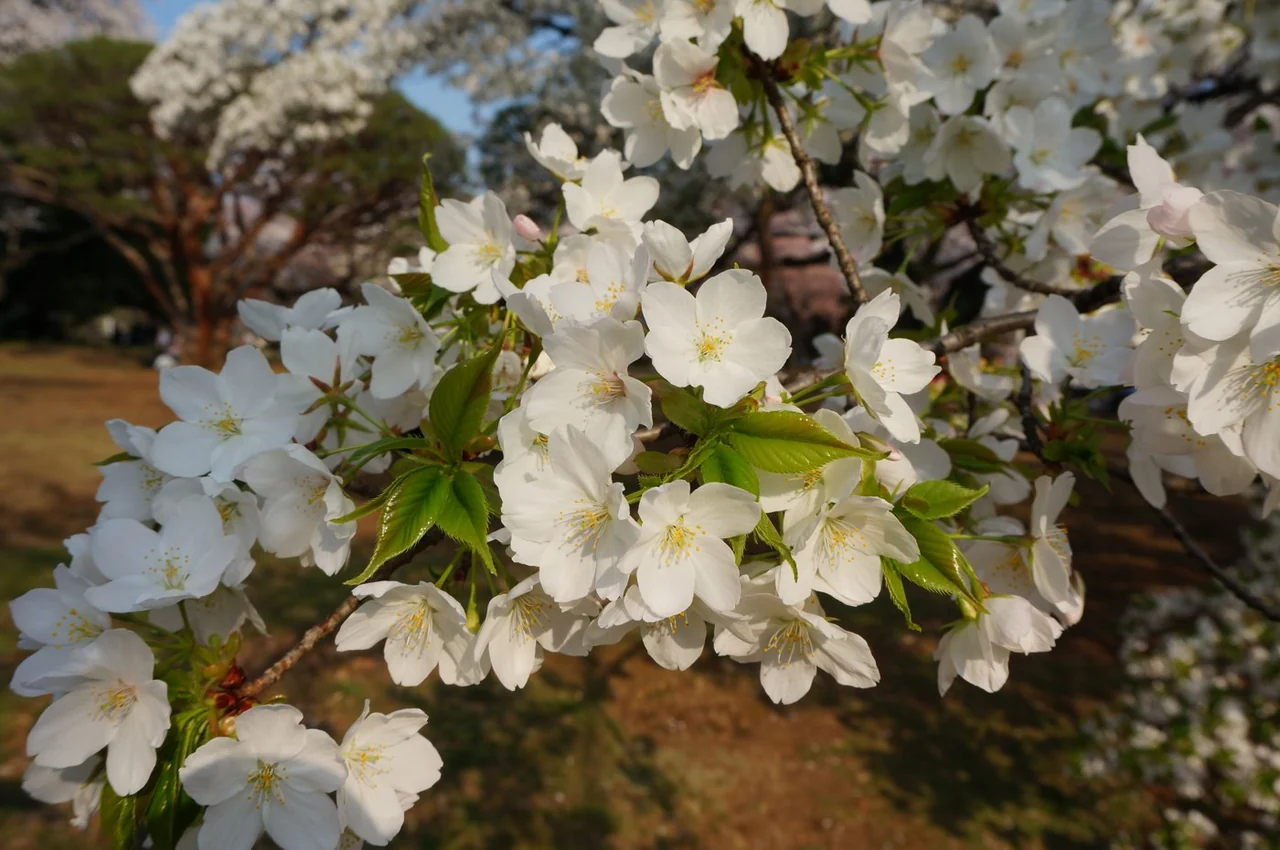
Photo: SLIMHANNYA · CC BY-SA 4.0Resized for display; image license retained. 03
Oshima-zakura · Oshima cherry
Cerasus speciosa
Large white flowers appear with fresh green leaves. This fragrant-leaved species contributed to many double-flowered garden cherries and to Somei-yoshino’s ancestry. Its commercially salt-preserved leaves are the familiar wrapper for sakura mochi.
- Native range
- Izu Islands and the Izu Peninsula region of Japan.
- Typical flowering
- Typically March–April.
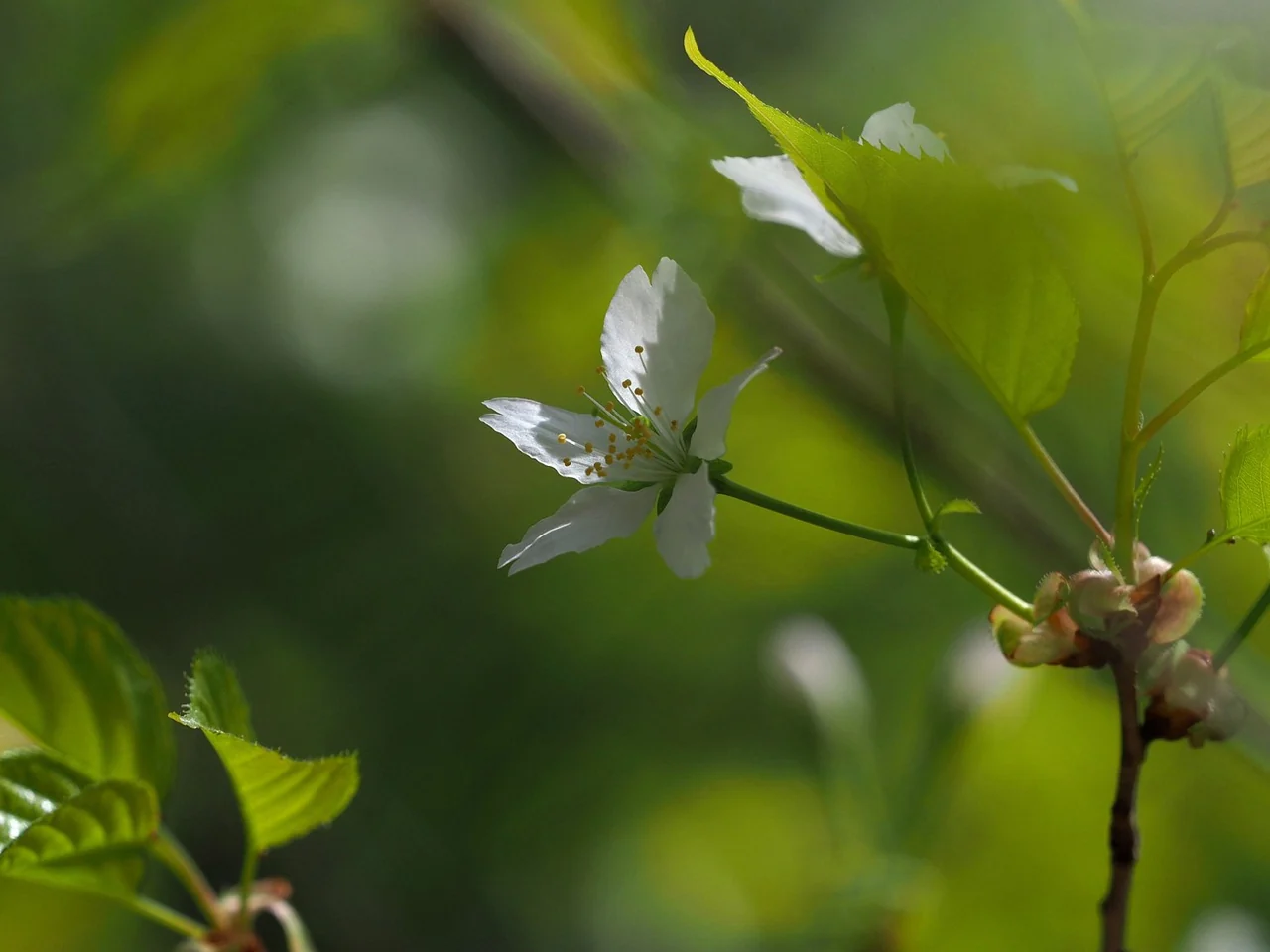
Photo: Greg Peterson · CC BY-SA 3.0Resized for display; image license retained. 04
Kasumi-zakura · Japanese hill cherry
Cerasus leveilleana (syn. Prunus verecunda)
White or faintly pink flowers create a mist-like effect across hillsides. Fine hairs on leaf stalks and flower stalks are useful clues, although some individuals have fewer hairs. Check more than petal colour when distinguishing it from mountain cherry.
- Native range
- Hokkaido, Honshu and Shikoku; also parts of continental East Asia.
- Typical flowering
- Typically April–May, later than Yama-zakura locally.
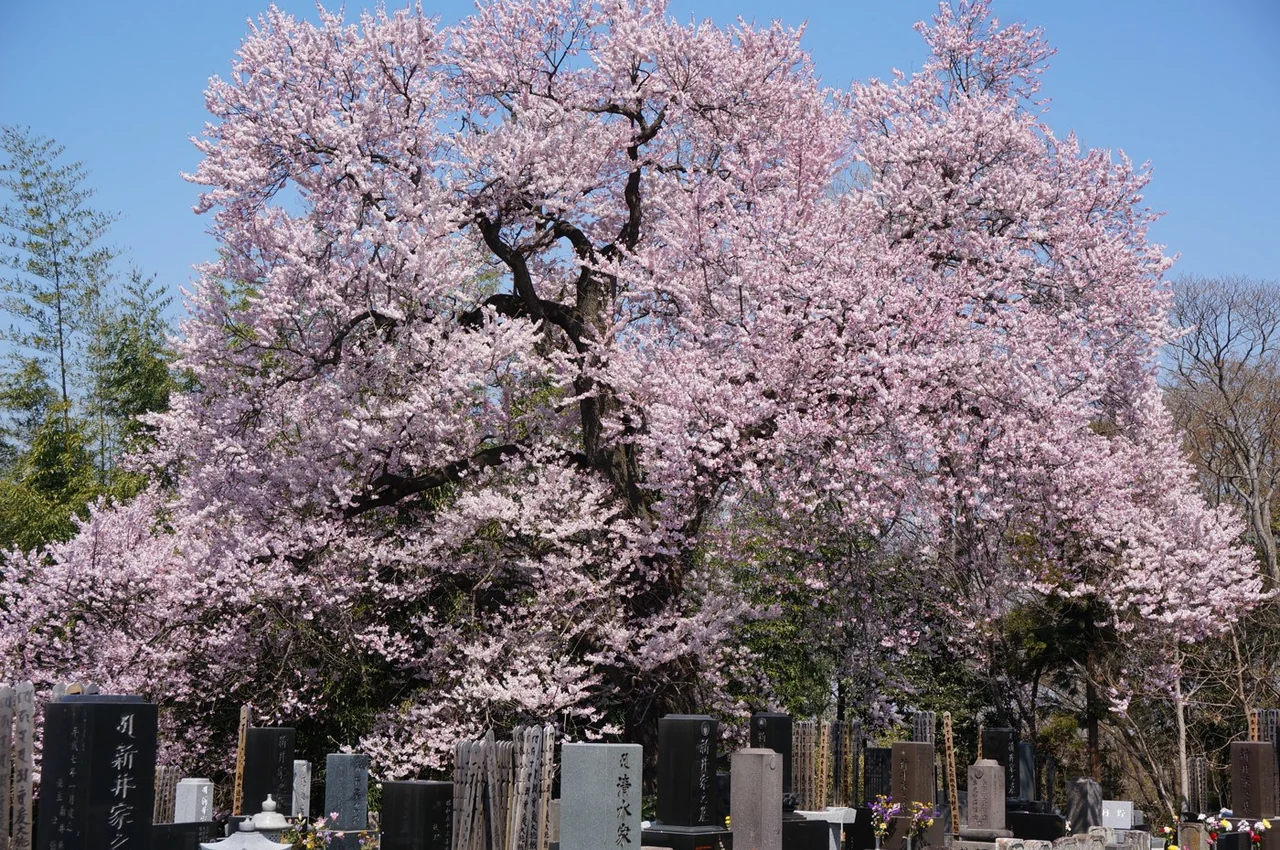
Photo: SLIMHANNYA · CC BY-SA 4.0Resized for display; image license retained. 05
Edohigan · Spring equinox cherry
Cerasus itosakura (syn. C. spachiana)
A swollen, rounded floral cup at the flower’s base is an important identification clue. This species includes exceptionally old trees and gave rise to many weeping forms. “Weeping cherry” describes a growth habit, not a separate wild species.
- Native range
- Honshu, Shikoku and Kyushu; related populations occur elsewhere in East Asia.
- Typical flowering
- Often March–early April, before the leaves.
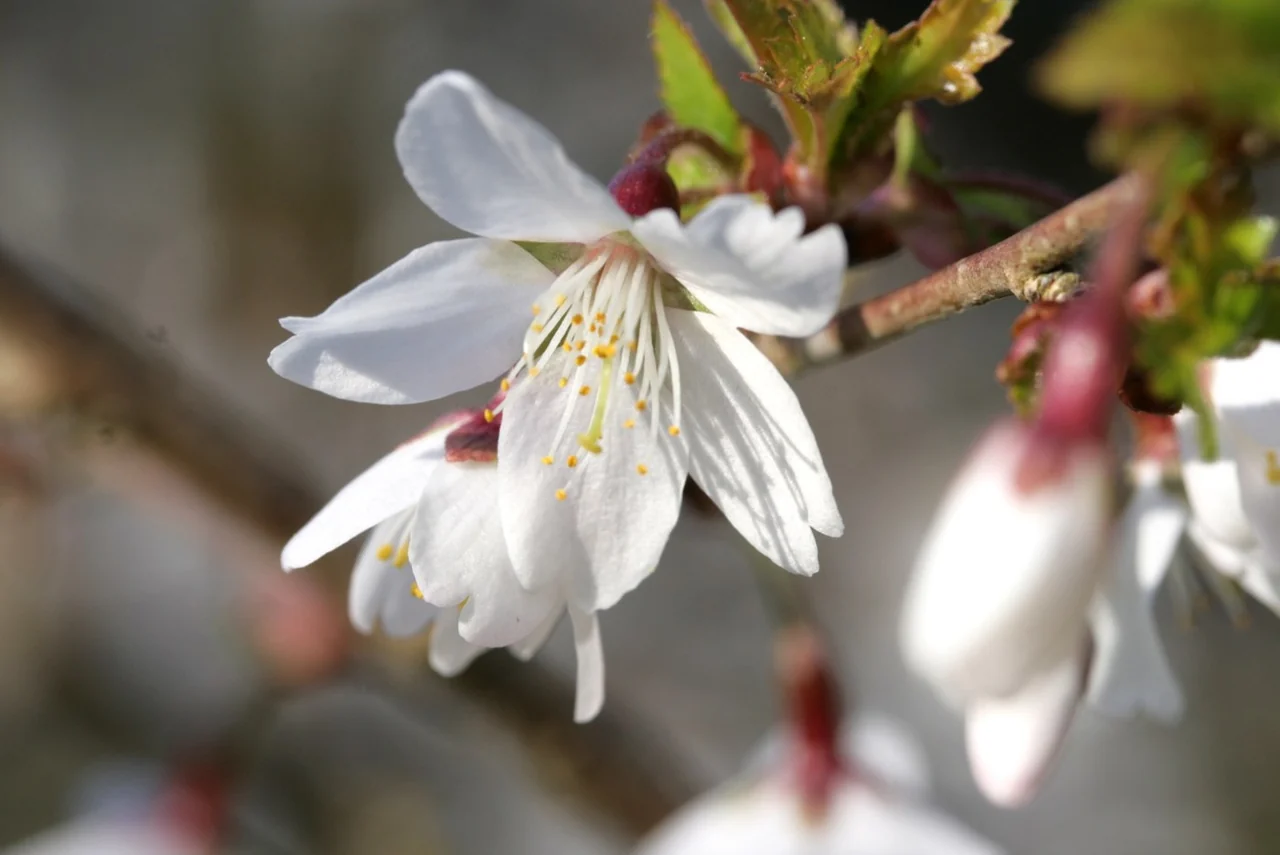
Photo: Sten Porse · CC BY-SA 3.0Resized for display; image license retained. 06
Mame-zakura · Fuji cherry
Cerasus incisa
Small, often downward-facing white to pale-pink flowers grow on a relatively small tree or shrub. Deeply toothed leaves are another clue. Its compact character has made it popular in gardens and bonsai; named garden selections are cultivars of this species.
- Native range
- Central Honshu, especially the Fuji–Hakone and Izu areas.
- Typical flowering
- Typically March–May, depending on altitude.
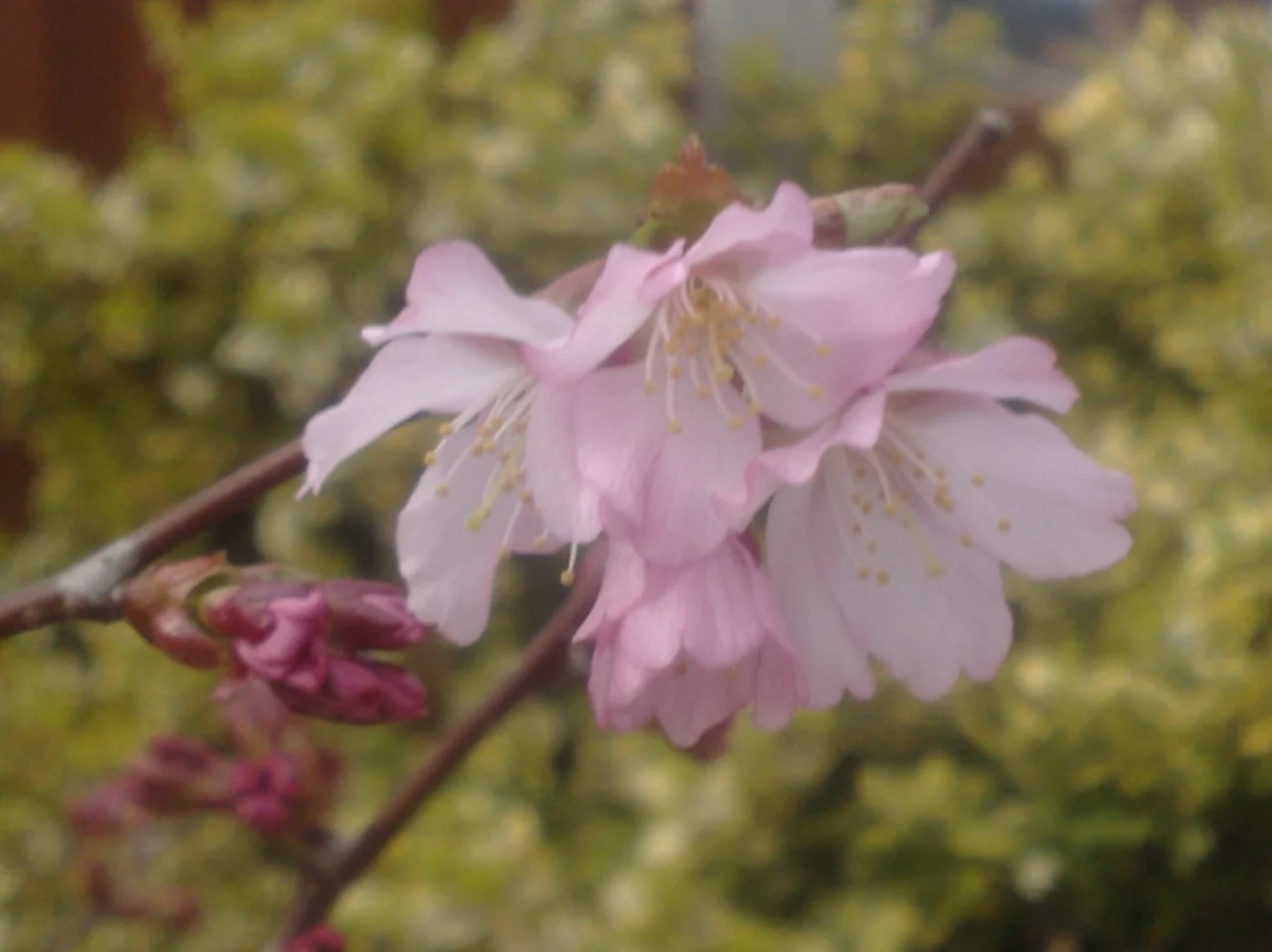
Photo: Andy Mabbett · CC BY-SA 3.0Resized for display; image license retained. 07
Takane-zakura · Alpine cherry
Cerasus nipponica
Also called Mine-zakura, this small cherry grows in cold mountain environments. Pale pink to white flowers can appear while lowland hanami is already over. Snowmelt and elevation influence the timing; alpine populations should be admired without leaving marked trails.
- Native range
- Hokkaido and mountain areas of northern/central Honshu.
- Typical flowering
- Often May–July in mountain habitats.
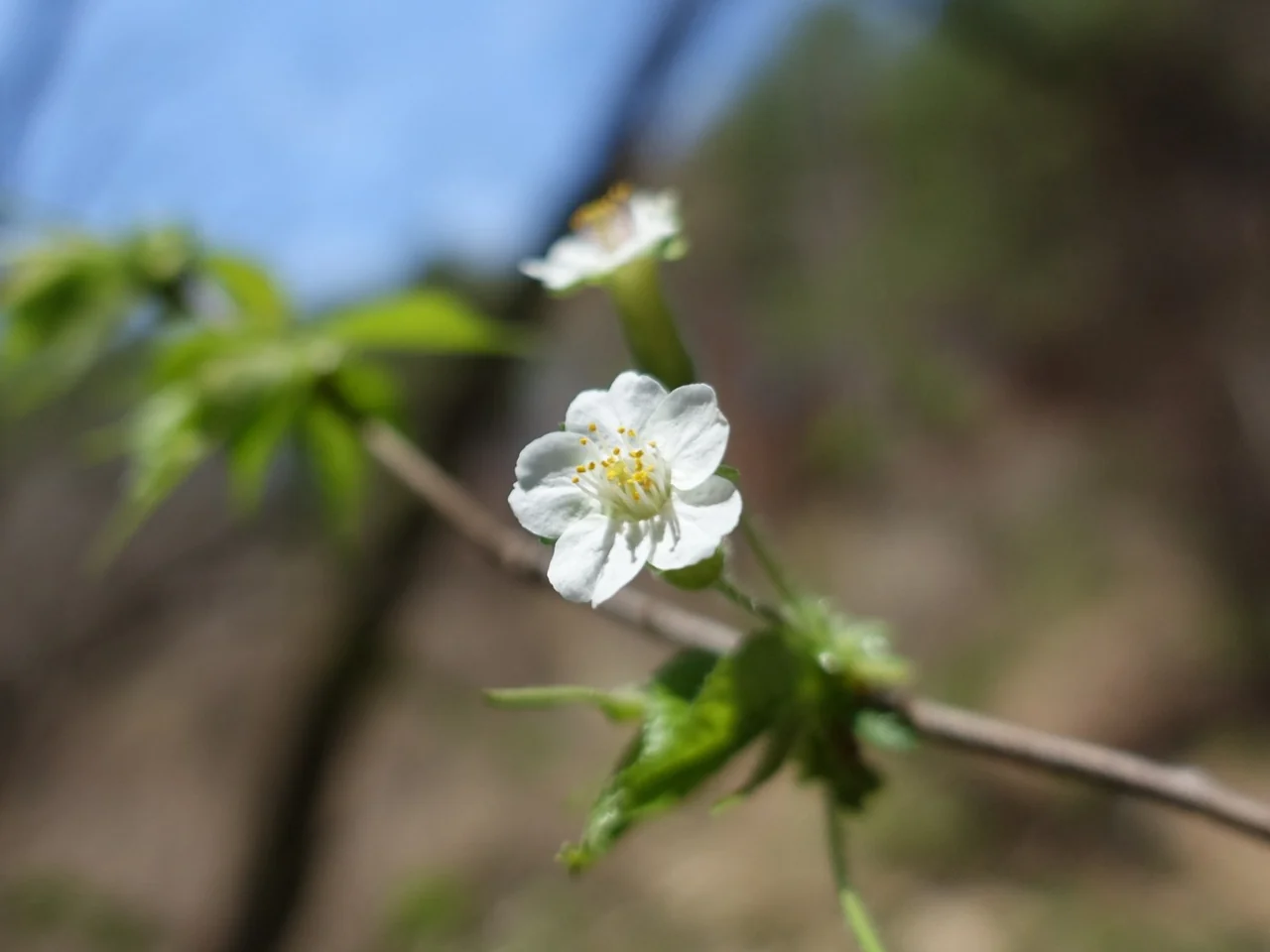
Photo: 中距離快速 · CC BY 4.0Resized for display; image license retained. 08
Choji-zakura · Clove cherry
Cerasus apetala
Small white flowers have a long tubular floral cup, giving a clove-like or T-shaped profile. The petals are much less showy than those of park cherries. The photograph is the documented variety tetsuyae within this species; it is not the double-flowered cultivar Kanzan, also sometimes called “clove cherry” in English.
- Native range
- Woodlands of Honshu; distribution varies by variety.
- Typical flowering
- Typically March–April.
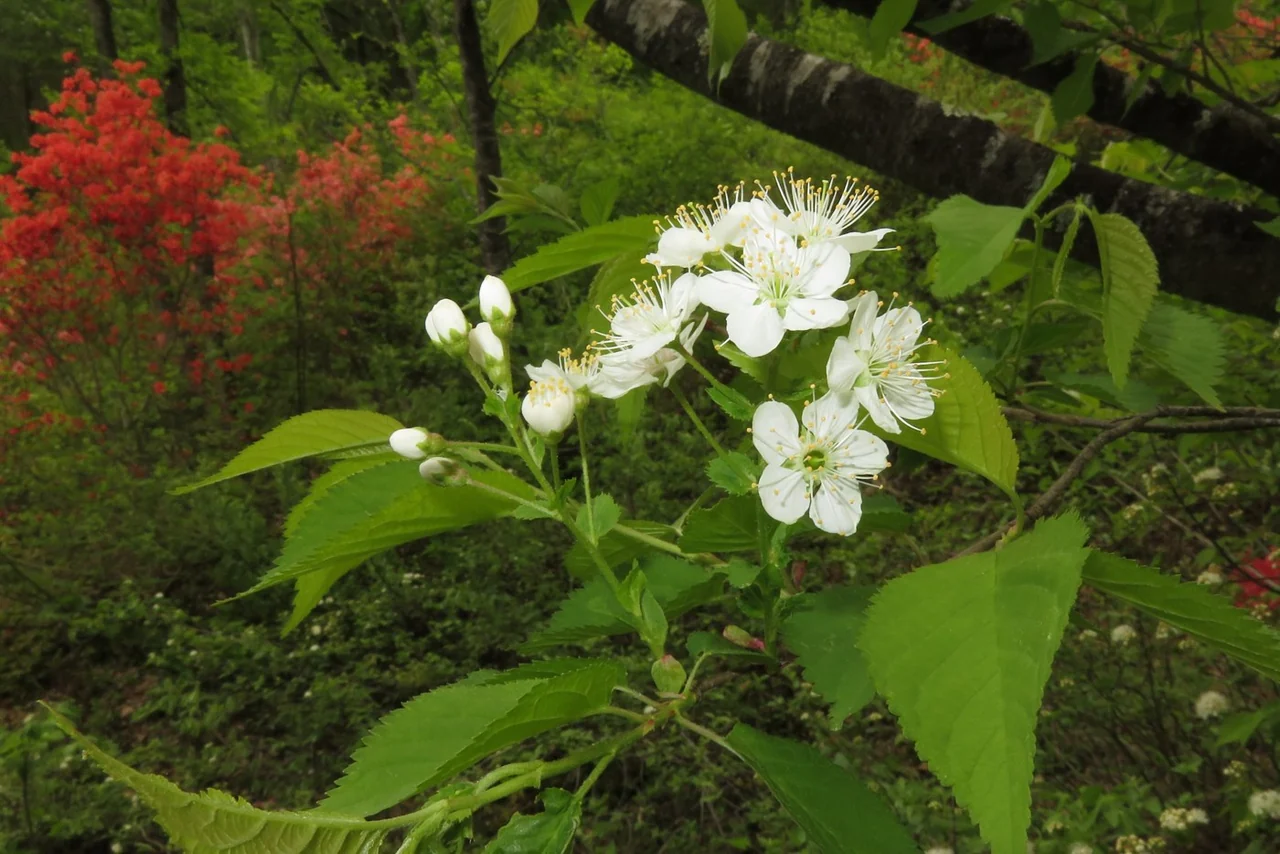
Photo: Qwert1234 · CC BY-SA 3.0Resized for display; image license retained. 09
Miyama-zakura · Miyama cherry
Cerasus maximowiczii
Small white flowers stand in upright racemes, unlike the familiar dangling clusters of Somei-yoshino. Small leafy bracts remain at the flower bases. Look for it in mountain woodland rather than expecting a spectacular, leafless pink canopy.
- Native range
- Mountain forests from Hokkaido to Kyushu; also northeastern continental Asia.
- Typical flowering
- Typically May–June, after leaves develop.
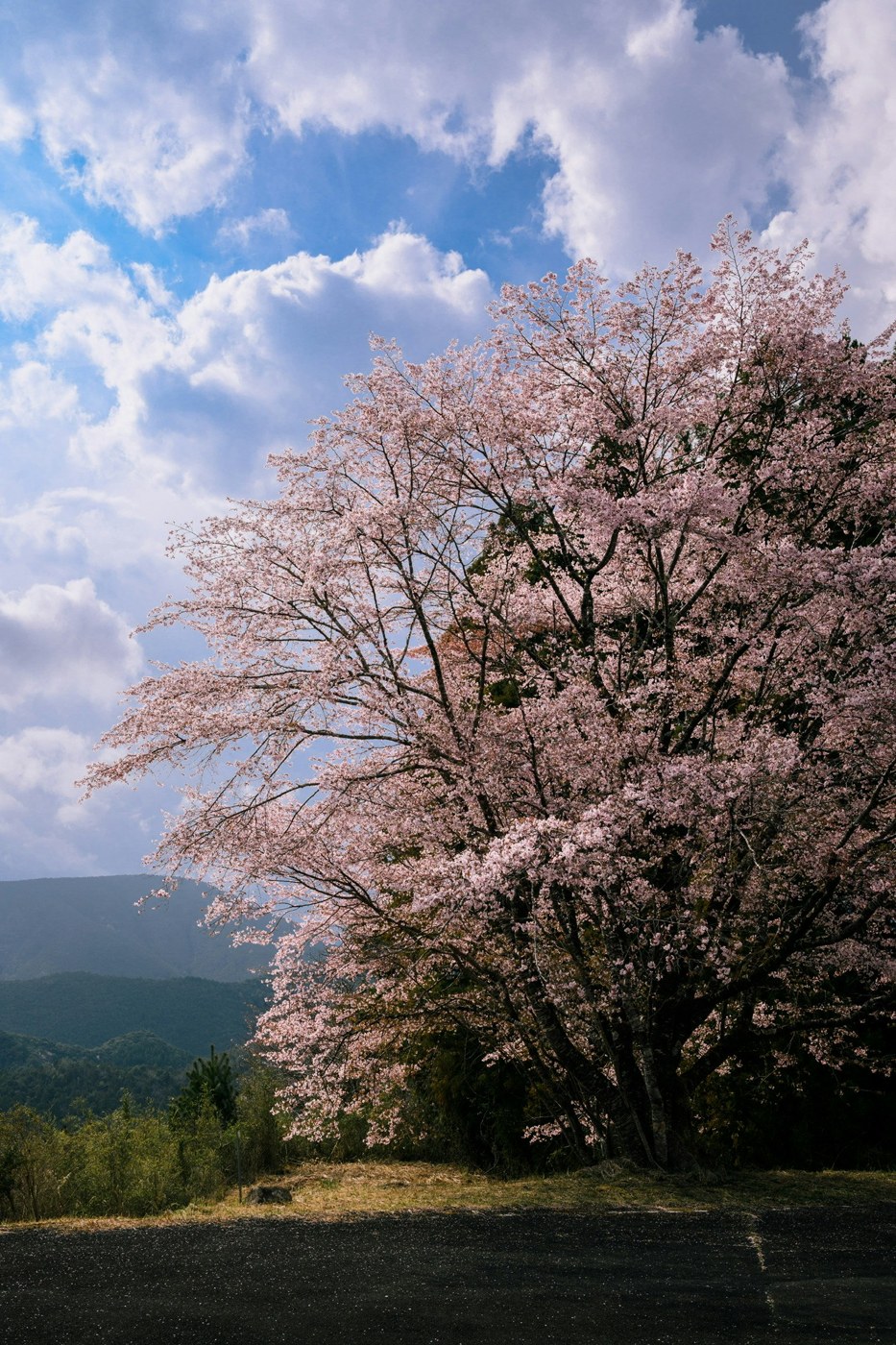
Photo: nori9 · cizucu licenseResized for display; image license retained. 10
Kumano-zakura · Kumano cherry
Cerasus kumanoensis
Recognized as a new species in 2018 after being confused with Yama-zakura and Kasumi-zakura. Pale pink to white flowers usually open before its small leaves; flower stalks lack hairs. It often blooms earlier than nearby mountain cherries. Protecting its regional habitat matters as much as planting ornamental trees.
- Native range
- Southern Kii Peninsula: Wakayama, Mie and Nara prefectures.
- Typical flowering
- Often February–March in warmer locations.
Sakura in food, fragrance & skincare
Food: food-grade salt-preserved blossoms flavour sakura tea, rice, bread and sweets. Salt-preserved Oshima-zakura leaves traditionally wrap sakura mochi. Kanto’s thin pancake-like wrapper and Kansai’s textured rice style are different regional expressions of the same seasonal treat. Sakura tea is usually a salted-flower infusion rather than a tea-leaf drink; check ingredients if avoiding caffeine or salt.
The familiar sakura-mochi aroma comes partly from coumarin, released when leaf cells are broken by salting or drying. A blossom on the tree may smell much less strongly than a sakura-flavoured sweet. Some pink seasonal products use added flavouring or colour rather than real cherry blossoms.
Safety: buy ingredients labelled for food use, follow preparation directions and enjoy normal culinary amounts. Do not pick roadside or park blossoms: identification, pesticide use and permission may be uncertain. Do not make concentrated leaf extracts; coumarin can be harmful in high exposure. Check ingredients for allergens and ask a qualified professional if you have a relevant health condition.
Skincare: cherry leaf or blossom extracts occur in creams, soaps and other cosmetics, and sakura-inspired fragrance is widely used. A small 2014 study examined a particular extract cream in 40 volunteers with experimentally irritated skin; this is not proof that all sakura products treat eczema, prevent ageing or suit sensitive skin. Benefits depend on the whole formulation. Patch-test according to the label, stop if irritated and use sunscreen rather than treating sakura extract as sun protection.
Other uses: cherry wood is used in furniture, crafts and traditional woodblock printing, while cherry bark features in kabazaiku craftwork. Flowers also support pollinators and fruit feeds birds. These cultural and ecological roles continue long after the petals fall.
How to recognise a blossom
Start with several clues together: petal number, flower size, the notch at the tip of a petal, flower stalk length, the shape of the floral cup, young-leaf colour and whether leaves appear with the flowers. Five petals alone do not identify a species. Natural variation and hybridisation make identification from one photograph uncertain.
Cherry flowers commonly have a small notch at the petal tip and grow on visible stalks. Plum (ume) flowers often have rounder petals and sit close to the branch; peach blossoms often have more pointed petals. These are useful starting clues, not foolproof rules. Look for a tree label or consult a local botanical guide.
For your own field notes, photograph the whole tree, a flower from the side, young leaves and any identification sign. Do not break a twig to get a closer view. The ten photographs below are examples, not an identification key.
Your first hanami: timing & etiquette
Japan’s blossom season varies greatly with species, latitude, elevation and the year’s weather. Some early cherries bloom in winter; major lowland viewing spots often peak in March or April, Hokkaido later, and alpine cherries into early summer. A single tree’s best display is often around a week, but rain, wind and temperature can shorten or extend it.
Kaika means flowering has begun; mankai means full bloom. The familiar sakura front mainly tracks designated observation trees, often Somei-yoshino, rather than every species. Check the local park’s latest report before travelling, and keep itinerary dates flexible.
Stay off roots, do not shake branches for falling petals, and never pick flowers. Follow picnic and alcohol rules, take rubbish home, and keep noise low near homes and temples. Night viewing is called yozakura; check opening times and your last train. For accessible paths, toilets and seating, consult the venue rather than assuming every blossom spot is easy to reach.
Sources & photo credits
Botanical classification, cultural history and practical guidance are drawn from the references below. Each species photograph has its own author, original source and license; please check these before reusing it.
- Highlighting Japan: wild cherries and flower-viewing history (2024)
- FFPRI: the discovery of Kumano-zakura (2018)
- Tama Forest Science Garden: species and cultivar guide
- National Museum of Nature and Science: Japanese cherries (older nine-species treatment)
- MAFF: Tokyo sakura mochi and its preserved cherry leaves
- Hakushika Sake Museum: the scent of cherry leaves and coumarin
- Zhang et al. (2014): a limited study of cherry extract cream