A first-timer’s field guide
Hanami
A walk beneath pink branches, a shared picnic, a moment to notice spring. Here is how to enjoy Japan’s cherry blossoms thoughtfully—even if it is your very first visit.
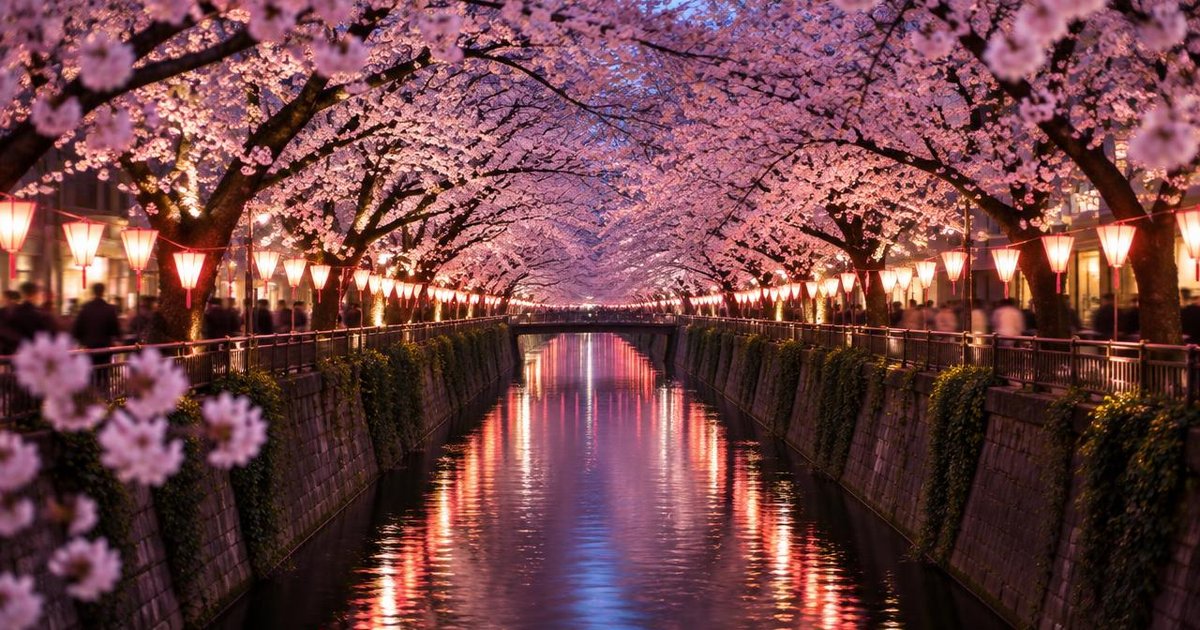
Meguro River, Tokyo · Hanami can be a riverside stroll, not just a picnic.
What is hanami?
Hanami (花見) literally means “flower viewing”: hana is flower, and mi is viewing. Today it usually means appreciating sakura, Japan’s cherry blossoms, in spring. You can walk, sit on a bench, take photographs or share food in a place where picnics are permitted. No party or alcohol is necessary.
Yozakura (夜桜) means cherry blossoms at night, sometimes lit by lanterns or special illuminations. Ume, or plum blossoms, also have their own flower-viewing traditions. Hanami is an experience, not a single festival with one date.
From court poetry to spring picnics
Flower appreciation is associated with aristocratic gatherings in the Nara period (710–794), when plum blossoms were especially admired. In the Heian period (794–1185), cherry blossoms became increasingly prominent in court poetry and flower-viewing gatherings.
Over time, blossom viewing spread beyond court circles. During the Edo period (1603–1868), public cherry-tree plantings and popular outings helped make hanami part of city life. Today it ranges from quiet solitary walks to gatherings of friends, families and colleagues.
Why these fleeting flowers matter
A tree’s best blossoms often last only a short time. That fleeting beauty is linked to mono no aware: a tender awareness that beautiful things change and pass. You do not need to study philosophy to participate—simply pause and notice the season.
Spring also overlaps with the start of Japan’s school and business year in April, so sakura often evoke new beginnings and farewells. People relate to the season differently; there is no single belief or ritual everyone follows. Respectful curiosity matters more than performing a custom perfectly.
When and where to go
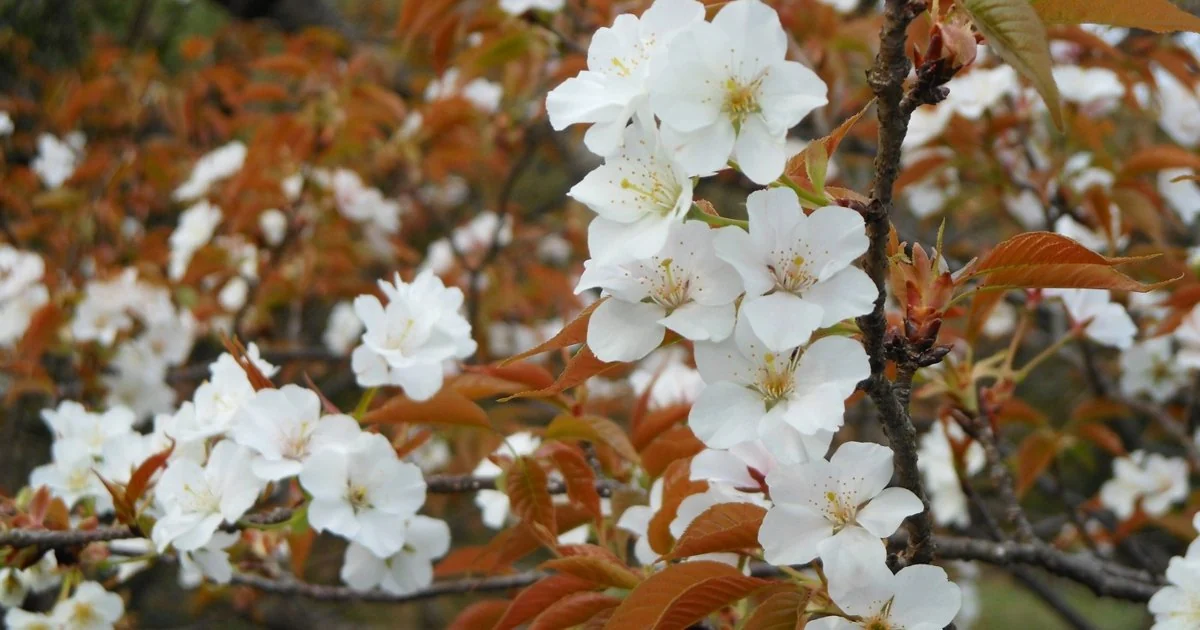
Bloom timing depends on the region, variety and weather. Many central-Japan destinations peak around late March or early April; northern and higher-altitude locations often bloom later, while some southern areas and early-flowering varieties bloom earlier. Forecasts are estimates, not promises.
Check recent bloom reports, the weather, the venue’s picnic policy and any timed-entry or festival requirements. A beautiful riverside path may be for walking only. At Chidori-ga-fuchi, for example, picnic locations are specifically designated and unattended spot-saving with sheets is prohibited.
- Try a weekday morning and allow extra travel time for crowded stations.
- Choose an accessible route with toilets and benches if travelling with children or anyone who needs breaks.
- Keep a rainy-day alternative, such as a café near the park. Do not force a picnic in strong wind or rain.
- For evening viewing, check illumination hours and the last train home.
Park rules & Japanese picnic etiquette
The posted rules come first. Picnic areas, alcohol, smoking, barbecues, tents, drones, opening hours and reserving space are regulated differently by each venue. “Others are doing it” is not permission. Ask staff if you are unsure.
Use only the space your group needs, keep paths clear and avoid tree roots. Never pick blossoms, shake branches, climb trees or fasten anything to them. Keep music and voices considerate, ask before photographing identifiable strangers, and give residents and other visitors room.
Take shoes off before stepping onto a shared picnic sheet if that is your group’s custom; keep footwear at the edge, away from food. Do not enter another group’s sheet without being invited. “Sumimasen” (excuse me) and “arigatō gozaimasu” (thank you) are useful, simple courtesies.
- Bring rubbish bags and take everything away if no suitable bins are available. Sort waste according to local signs.
- Do not leave a sheet overnight or reserve unattended space unless the venue explicitly permits it.
- No open flames or cooking stoves without explicit permission; many parks prohibit them.
- Use designated smoking areas only, and keep pets on leads where they are allowed.
What to wear
There is no hanami dress code. Comfortable everyday clothing is enough. Dress in layers: a sunny afternoon can turn cold when you sit on the ground or stay for yozakura. Bring a light jacket, and choose warmer layers for northern Japan or evenings.
Wear comfortable walking shoes and socks you do not mind showing on a picnic mat. A packable rain jacket, sun protection and a hat are practical. Traditional clothing is optional; if renting a kimono, ask about weather protection, walking comfort and return times.
What to bring
Pack lightly enough to carry your belongings home, including rubbish. A small insulated bag with ice packs helps keep perishable food cold; follow package storage instructions and do not leave bento in warm sunshine.
- A compact picnic sheet, plus a cushion or extra layer for cold ground.
- Water, ready-to-eat food, reusable chopsticks or utensils, and cups.
- Rubbish bags, tissues, wet wipes and hand sanitiser; use proper handwashing when available.
- Layers, rain protection, sunscreen and any prescribed medicines.
- A charged phone, power bank, offline route, transit card and some cash for stalls.
- For hay fever: your usual treatment, tissues and a mask if helpful. Ask a pharmacist about suitable products.
What to eat & drink
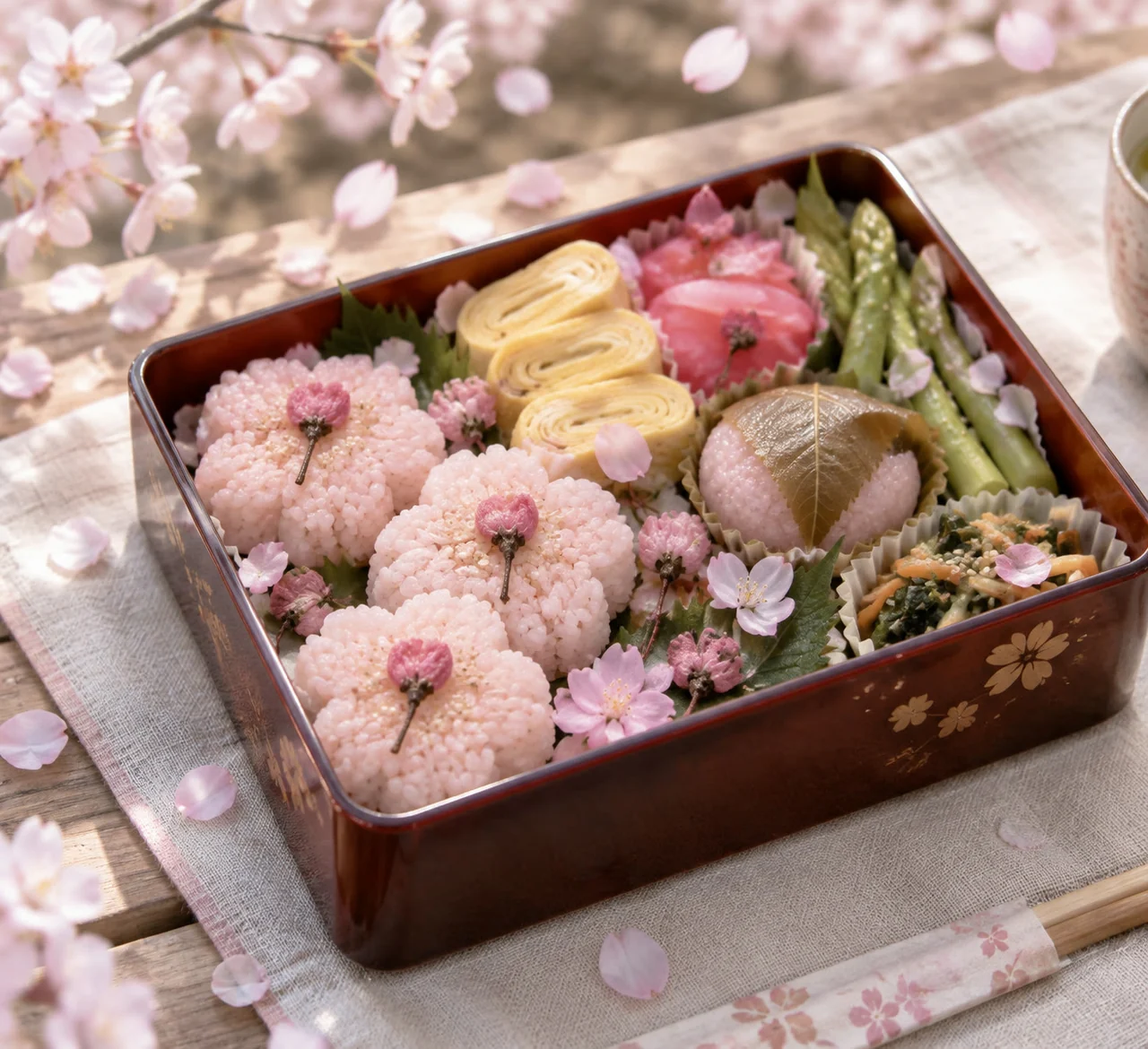
Hanami bento are easy picnic meals: look for onigiri, tamagoyaki (rolled omelette), vegetables and other ready-to-eat favourites. Popular spring sweets include pink sakura mochi and three-colour hanami dango. Regional styles vary, and seasonal treats may not be stocked everywhere.
Water, tea and soft drinks are welcome choices. Beer and sake are optional, and only appropriate where alcohol is permitted. Japan’s legal drinking age is 20. Never drink and drive, including cycling, and never pressure anyone to drink.
Read labels and ask about allergens; dashi, sauces and seemingly vegetable-based dishes can contain fish or other animal ingredients. Vegetarian, vegan, halal and gluten-free needs require checking rather than assumptions. Only eat blossoms or leaves sold for culinary use—never forage from park trees. Give small children age-appropriate foods; sticky mochi can be a choking hazard.
Where to buy picnic supplies in Japan
Convenience stores such as 7-Eleven, Lawson and FamilyMart are handy for onigiri, sandwiches, drinks and wipes. Supermarkets usually offer a wider selection of bento, fruit and drinks. Department-store basement food halls (depachika) are good for beautifully packed meals and seasonal sweets.
Try a local wagashi shop for sakura mochi or dango. Daiso, Seria and other 100-yen shops often carry picnic sheets, bags and utensils; prices and stock vary, and not every item costs 100 yen. Drugstores sell tissues, sunscreen and seasonal allergy products—ask the pharmacist for advice.
Festival stalls may offer foods such as yakitori and takoyaki where authorised, but some blossom venues have no stalls at all. Buy before arriving, carry a little cash and check shop hours. Bring reusable items when possible instead of buying a whole disposable picnic set.
A few do’s & don’ts to remember
Do slow down, share space, follow signs and leave the place as clean as you found it. A short walk or a quiet bench counts as hanami just as much as a large picnic. Solo visitors are welcome; you do not need to join an unfamiliar group.
Don’t block bridges for photos, step into fenced areas, pick flowers, feed wildlife or leave food scraps. Don’t assume every park allows parties, spot-saving or alcohol. If it becomes crowded, move on rather than forcing a perfect picture.
Before leaving, collect every wrapper and bottle, check for forgotten belongings and follow your route home. In an emergency in Japan, call 119 for an ambulance or fire service and 110 for police. Tell responders your park name and nearest entrance or landmark.
Sources & local rules
This introduction draws on the visitor resources below. Park rules, opening hours, reservations and festival arrangements can change: check the venue’s official information before you go.