Tohoku
The moat that turns pink: three days on Hirosaki's floating petals
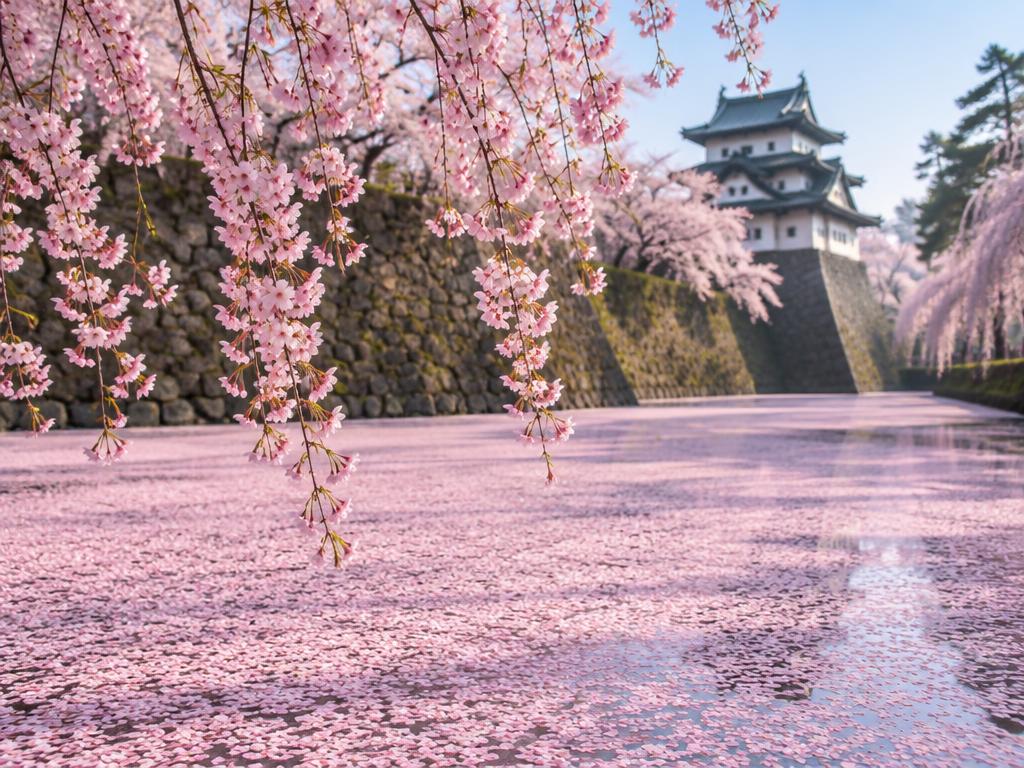
Hirosaki Park offers two springs in one: blossom overhead and, as petals fall, a second bloom across the moat. The floating pink layers are called hanaikada, or flower rafts. Their shape changes with the wind, so a photograph from yesterday is never a promise for today.
- When to go
- Usually late April to early May
- Getting there
- From Hirosaki Station, take a local bus towards the park or walk through the city.
Day one: learn the park
Begin with the outer moat and walk slowly towards the park entrances. Different cherry varieties bloom at different times, so look beyond the first crowded viewpoint. The castle setting, old trees and quieter paths make the park worth exploring even before petals cover the water.
Day two: follow the flower rafts
Return after the main bloom starts to fall. Look for sheltered corners of the moat where petals gather, but stay on public paths and never lean over barriers. Wind and rain can change the scene within hours.
Flower rafts are not guaranteed on any particular date. A flexible visit of several days gives you more chances than a single tightly scheduled afternoon.
Day three: see a different light
Try an early visit for softer light and another perspective on the moat. If seasonal evening illumination is running, check the official hours before returning. Some park areas have separate admission arrangements during the festival.
Book accommodation early for the sakura period and build in time for local buses. Hirosaki generally blooms later than Tokyo, but the gap varies substantially from year to year.
Bloom dates vary each year. Check local forecasts, transport schedules and official visitor notices before travelling.