Kansai
Thirty thousand trees, one mountain: climbing Yoshino's senbon-zakura
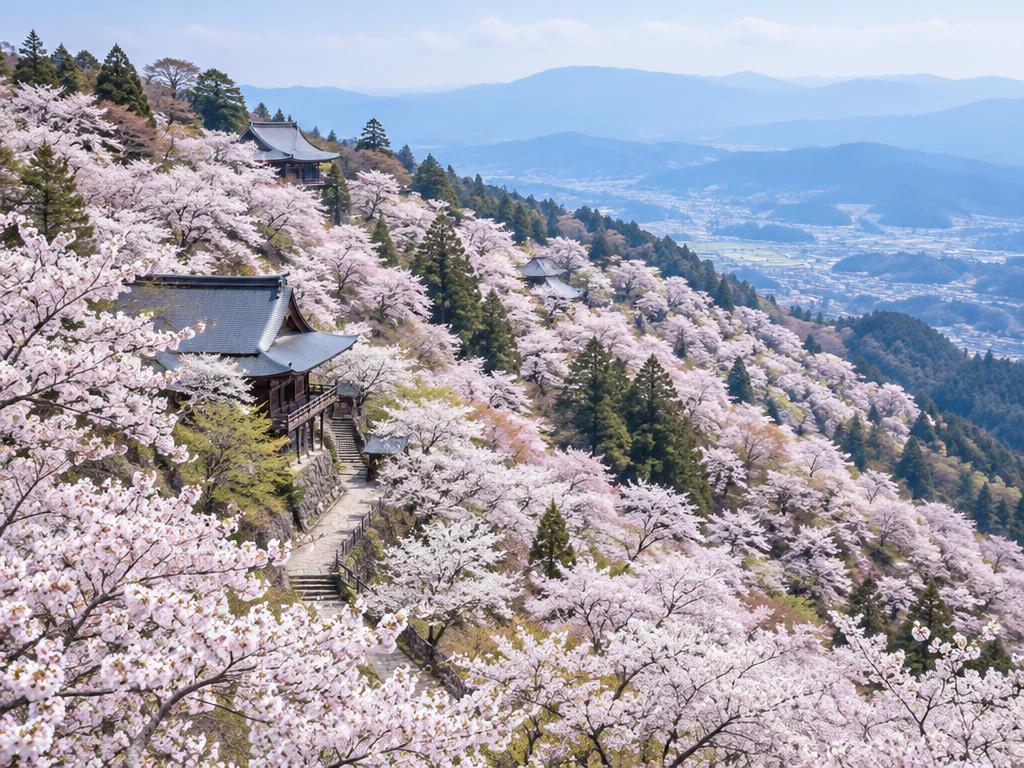
At Yoshino, sakura is a landscape rather than a single tree-lined path. Pale patches climb the ridges, temples sit among the slopes, and every bend brings a new layer of blossom. The best way to enjoy it is to choose a manageable section of the mountain and leave room to stop.
- When to go
- Usually early to mid-April, progressing uphill
- Getting there
- Take the Kintetsu railway to Yoshino Station; check seasonal onward transport.
Understand the mountain
The traditional blossom areas are Shimo, Naka, Kami and Oku Senbon. Lower elevations usually bloom first, while the higher areas follow. Do not assume the whole mountain reaches full bloom on the same day.
Choose your route from the latest bloom report, your walking ability and the weather. A lower-to-middle mountain walk can be rewarding without committing to the highest slopes.
Climb at your own pace
Wear shoes with good grip and carry water. Roads, steps and sloping paths require more effort than a flat city park. Seasonal buses or other transport may help, but services and crowd controls need checking before departure.
Look back as you climb: wide views often appear behind you. Keep entrances to temples and shops clear when stopping, and ask before photographing inside religious buildings.
Leave time for the return
A picnic stop or a local meal makes a better break than rushing between viewpoints. Take rubbish away and respect private land. Blossom season brings queues at stations, so start your descent with enough time to catch your planned train.
Some temples and special viewpoints charge admission. Check each place individually instead of expecting one ticket to cover the entire mountain.
Bloom dates vary each year. Check local forecasts, transport schedules and official visitor notices before travelling.